noun
invasion
in-VAY-zhun/ɪnˈveɪʒn/
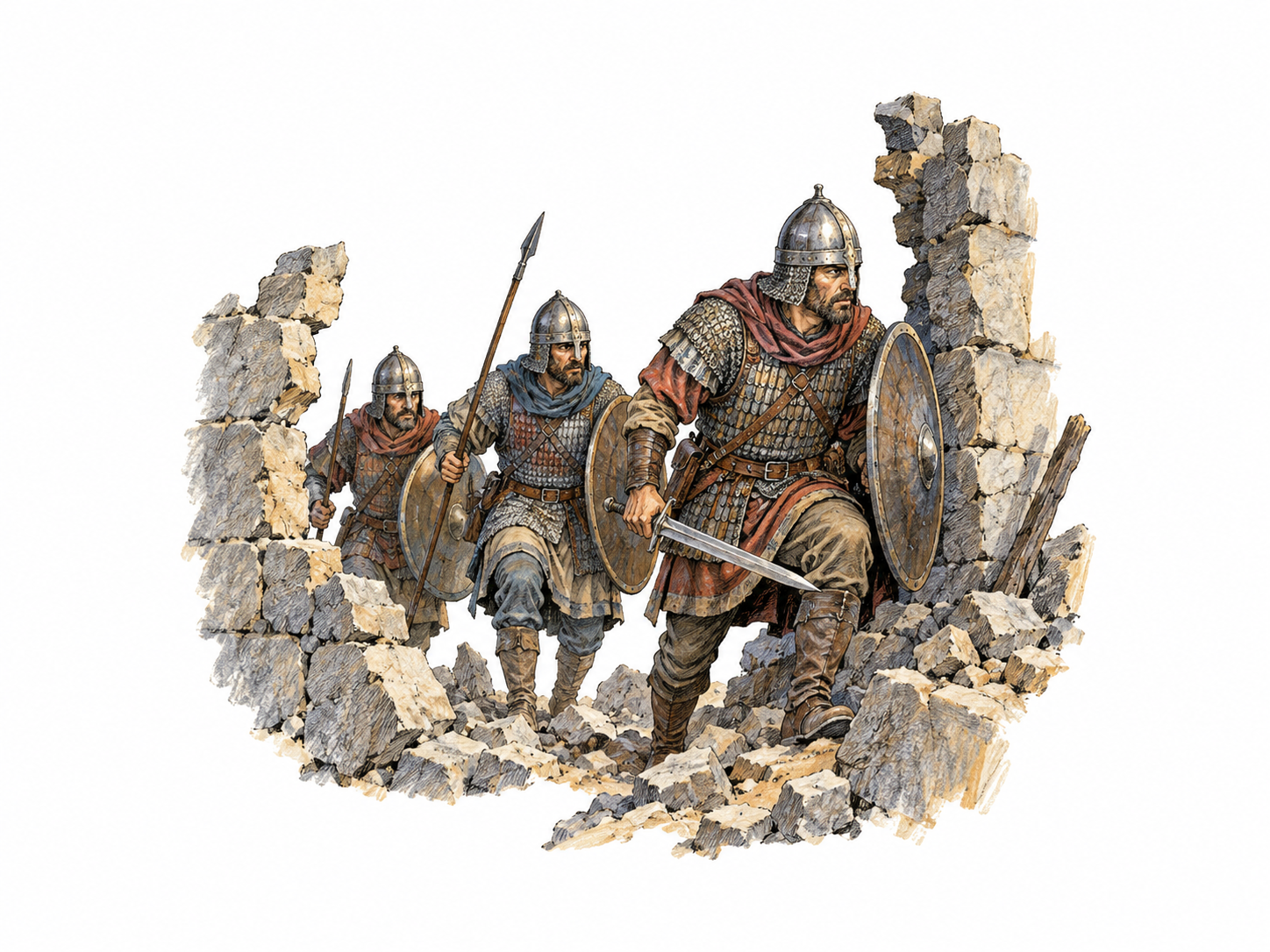
Hostile entry into another's territory.
The army prepares for an invasion of the neighboring country.
Etymology
The pieces suggest an act of “going into” a place. The underlying Latin verb already meant entering violently as an enemy, so invasion names hostile entry rather than mere arrival.
In context
move soldiers into the country and accept a Soviet intervention in the event of a German invasion The Finnish government reaffirmed its neutrality and said it would repel any foreign Invasion attempt
More examples
- Coastal defenses help repel an invasion.
- The invasion forces thousands of families to flee.
- The island has survived several invasions.
Forms
invasion · invasions
invade verb — Enter another territory with hostile force.
invader noun — Someone who enters another's territory by force.