noun
liquefaction
lik-wuh-FAK-shun/lˌɪkwʌfˈækʃʌn/
The process of becoming liquid or beginning to behave like a liquid.
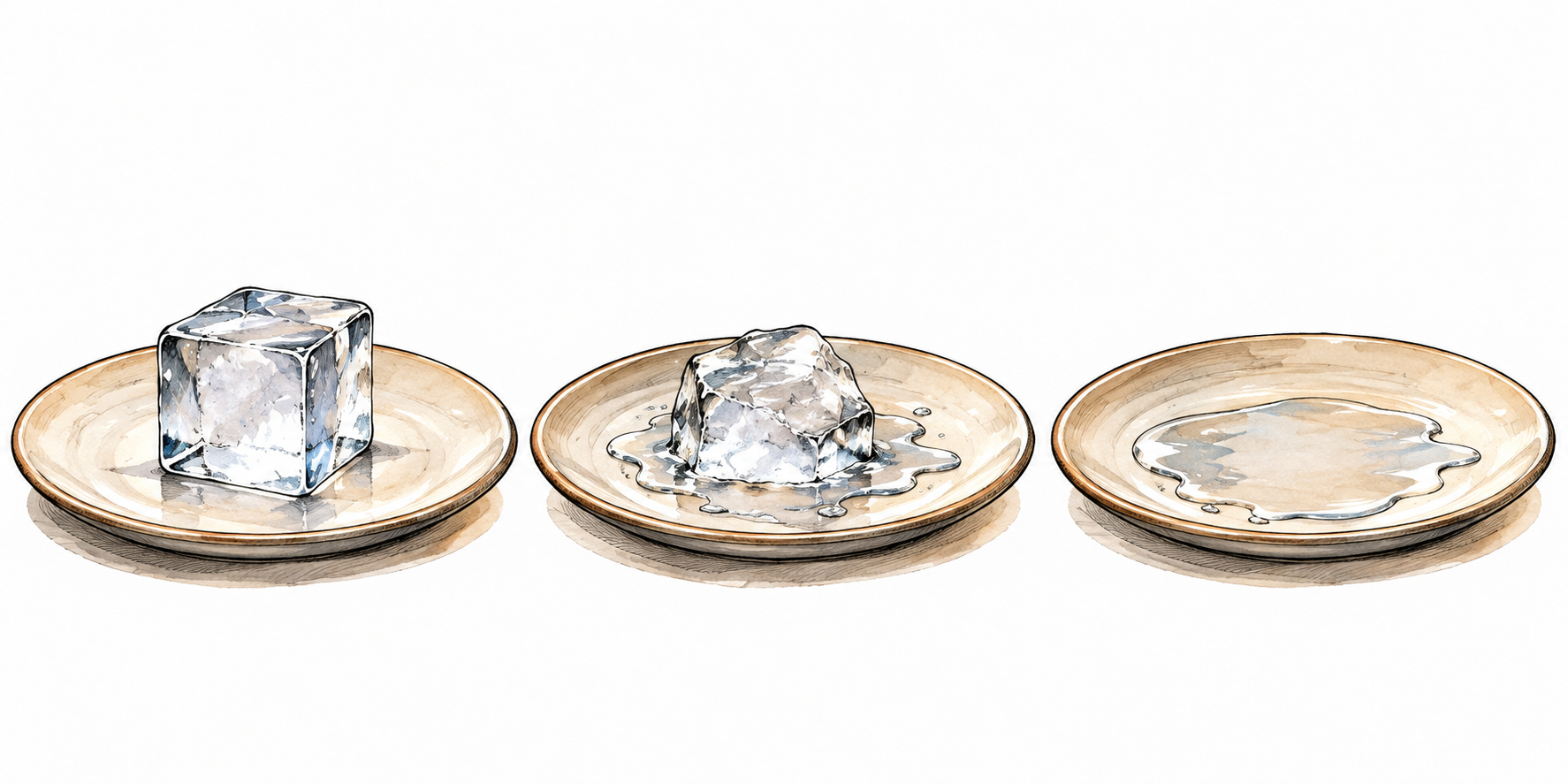
The melting ice cube undergoes liquefaction until only a puddle remains.
Etymology
The roots combine to mean “make fluid,” and the noun ending names that action as a process. Liquefaction therefore describes the change into a liquid state, rather than the liquid produced.
In context
They understood that saturated ground turns into a deadly slurry during an earthquake, a process modern engineers call liquefaction.
More examples
- Cooling the gas under pressure causes liquefaction.
- Heating the wax causes liquefaction.
- Engineers test the soil for its risk of liquefaction.
Forms
liquefaction
liquefy verb — To become liquid or make something liquid.
Similar words
- melting
- Specifically describes a solid becoming liquid, usually through heating.
- condensation
- Specifically describes a gas or vapor becoming liquid.