noun
depiction
dih-PIK-shuhn/dɪˈpɪkʃn/
A portrayal of someone or something in words, images, or performance.
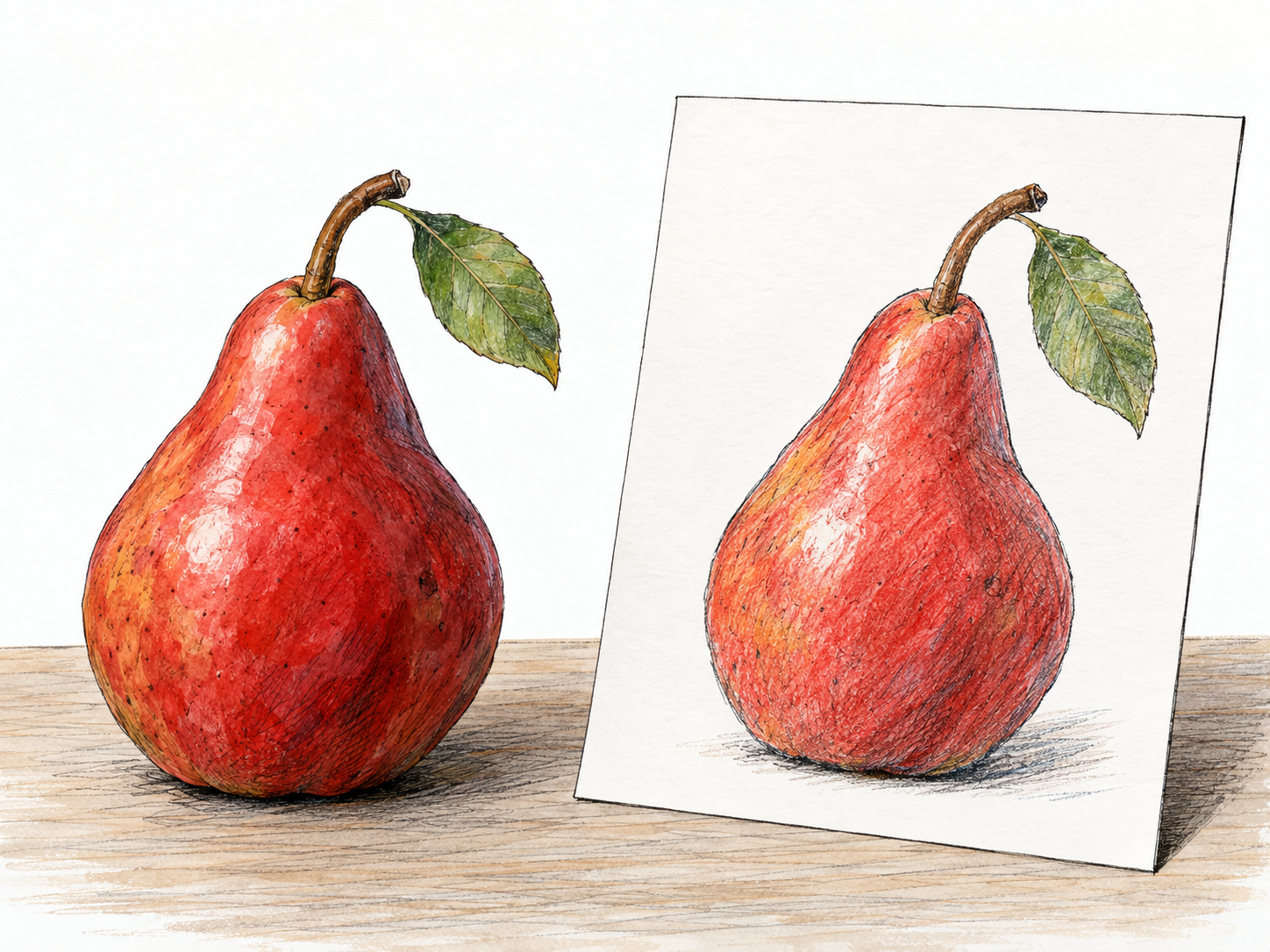
The drawing is a depiction of the pear beside it.
Etymology
The painting root supplies the image of making a likeness. The associated Latin verb also meant “describe” and “imagine,” connecting visual portrayal with the broader representation expressed by words or performance.
In context
there's not a lotta cellphone towers. So a lotta times when you try to ping a phone and there's not many towers, it doesn't give a real accurate depiction of where the device is at.
More examples
- Her depiction of winter used only a few colors.
- The report criticized the misleading depiction of events.
- The actor’s depiction of the ruler was unexpectedly gentle.
Forms
depiction · depictions
depict verb — represent in words or images
Similar words
- portrayal
- Portrayal similarly means a representation; depiction often emphasizes the visible or descriptive presentation.
- description
- A description uses words; a depiction can use words, images, or other forms of representation.