noun
nation
NAY-shuhn/ˈneɪʃn/
An independent country with its own government.
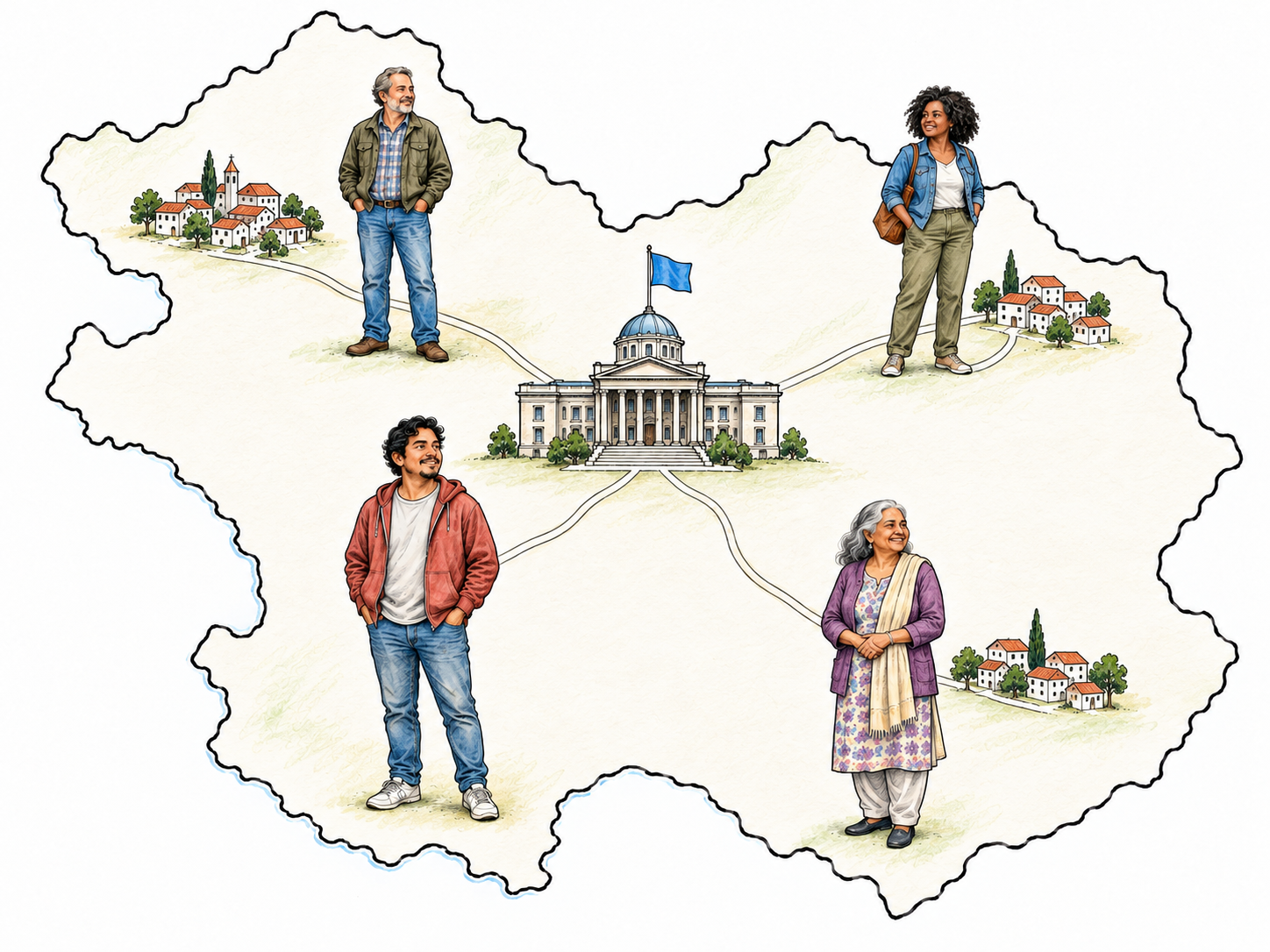
The map shows a nation with towns and a central parliament.
Etymology
The birth root connects nation with a people linked by common ancestry. From that shared-descent sense, the word came to name an organized political community under a government.
In context
the purpose of government is to enable the people of a Nation to live in safety and happiness government exist for the interest of the Govern and not the governors
More examples
- The two nations signed a trade agreement.
- Each nation sets its own immigration laws.
- The island became an independent nation in 1962.
Forms
nation · nations
national adjective — Relating to a country as a whole.
nationality noun — Legal membership in a particular nation.