adjective / noun
adverbial
ad-VUR-bee-ul/ædˈvɜːrbiəl/
Relating to or serving the grammatical role of an adverb.
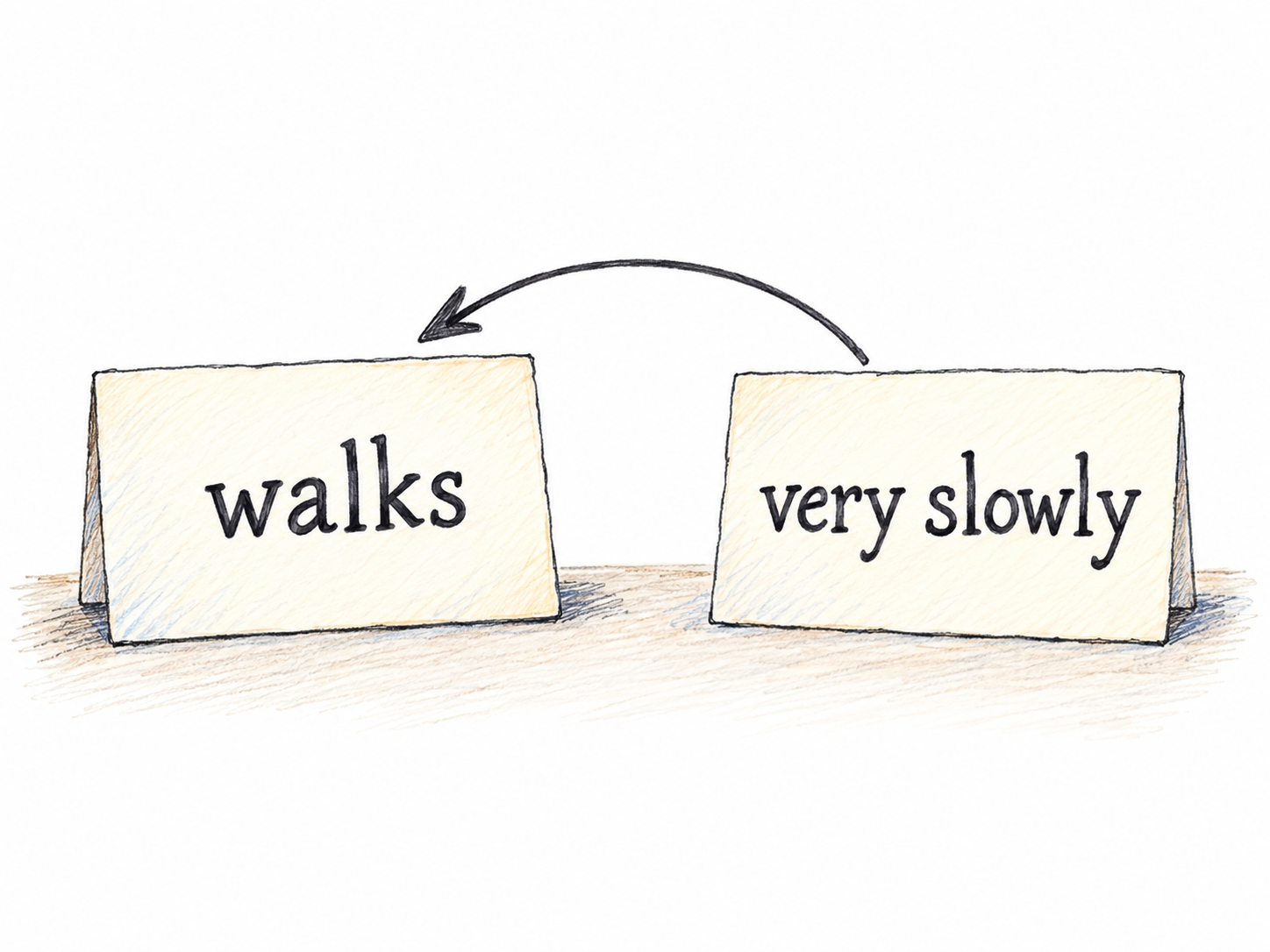
The phrase “very slowly” has an adverbial role, modifying “walks.”
Etymology
The pieces evoke something “added to a verb” to limit or extend its meaning. Adverbial describes something relating to adverbs or doing an adverb’s job.
In context
adverbial Clauses can describe time place manner reason purpose lots of other things in a sentence
More examples
- The teacher identifies an adverbial clause explaining when the event happened.
- Students compare one-word adverbs with longer adverbials.
- Moving the adverbial changes the emphasis of the paragraph.
Forms
adverbial · adverbials
adverb noun — A word modifying a verb, adjective, or clause.
Similar words
- adverb
- Names a word class rather than a phrase's broader function.
- modifier
- Broader; includes noun modifiers as well as adverbial elements.