adjective / noun
universal
yoo-nih-VUR-sul/ˌjuːnɪˈvɜːrsl/
Applying to or found in every relevant case.
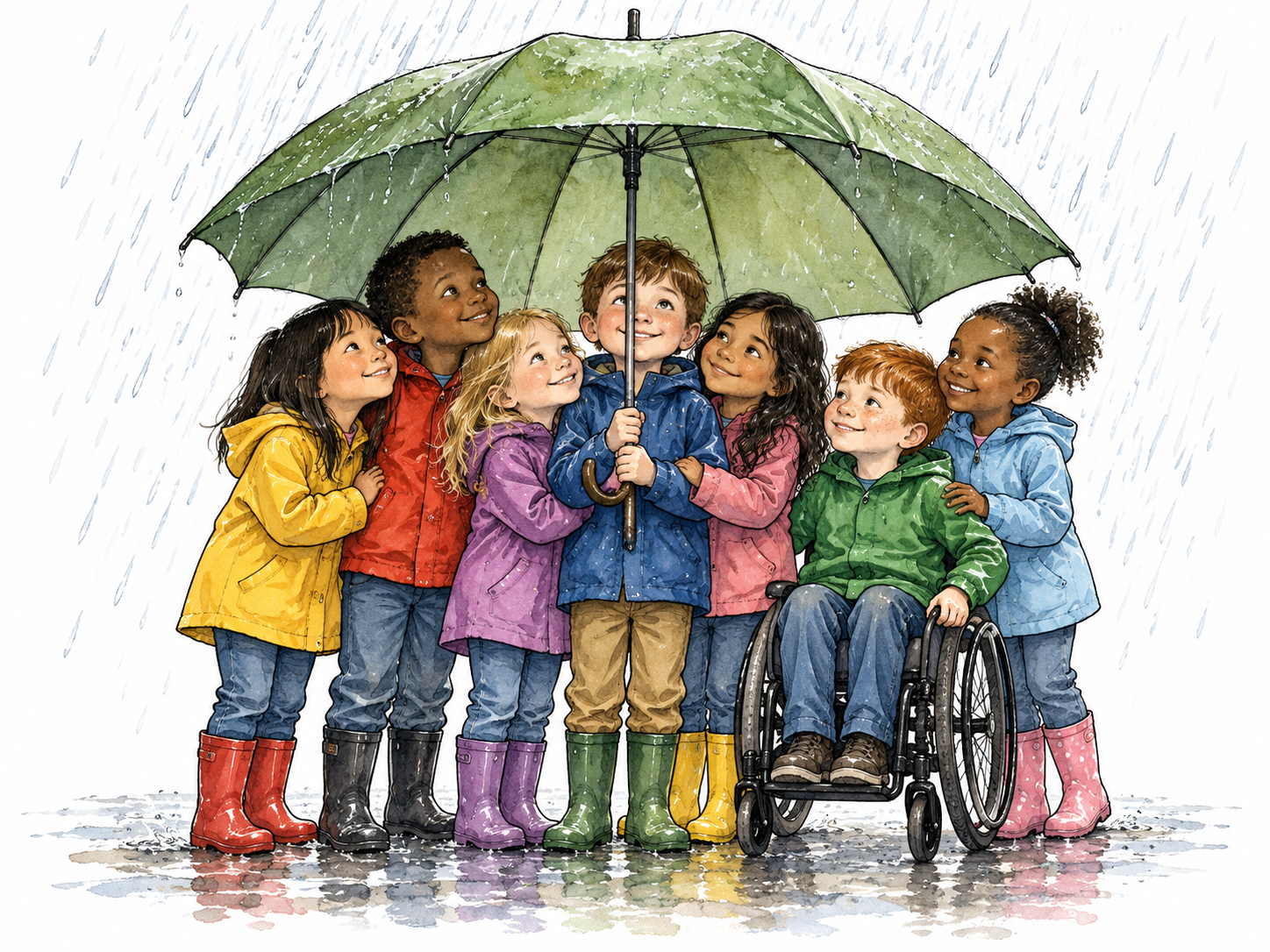
The broad umbrella provides universal protection for the children gathered beneath it.
Etymology
The image of being “turned into one” produced the meaning “all together” or “whole.” Universal therefore describes something applying to the whole group, rather than only particular members.
In context
Universal childcare for every baby age zero to five universal pre-k for every three-year-old and four-year-old in this country
More examples
- Their proposal received nearly universal support.
- The philosopher debated whether moral universals exist.
- No single solution is universal.
Forms
universal · universals
universally adverb — in every relevant case
Similar words
- general
- Applying broadly, but not necessarily without exception.
- all-encompassing
- Including everything relevant.