adjective
lethal
LEE-thuhl/ˈliːθl/
Capable of causing death or devastating harm.
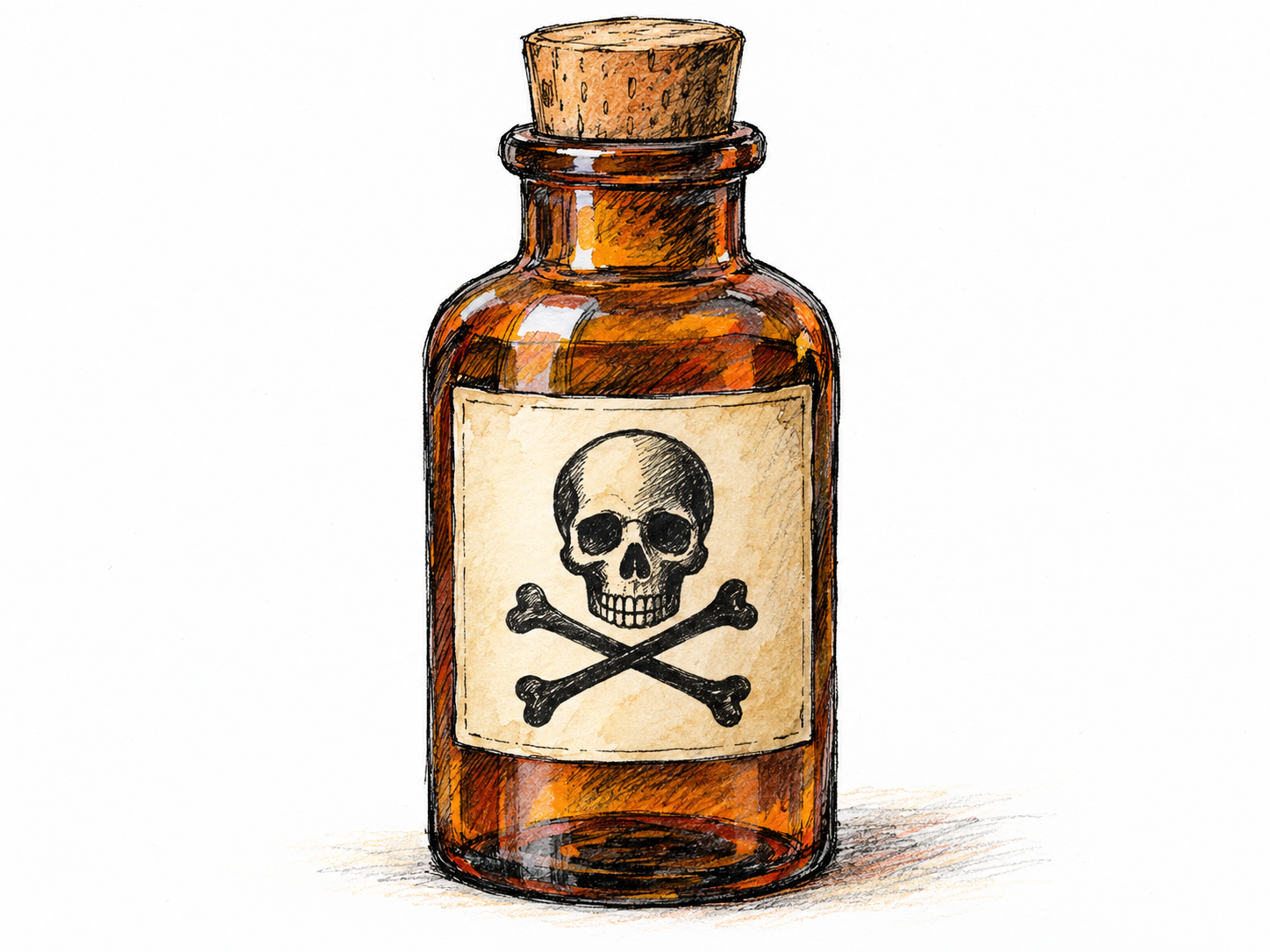
The hazard symbol warns that the bottle’s contents may be lethal.
Etymology
The death noun and adjective ending formed a word meaning “deadly” or “fatal,” directly underlying the modern sense. The deeper origin of the Latin noun is uncertain.
In context
If a lethal dose is inhaled or ingested, the poison immediately starts shutting down the energy generators of the body, and death occurs within minutes or even seconds.
More examples
- The attack proved lethal.
- A small leak could create a lethal danger.
- The striker’s lethal finishing decided the match.
Forms
lethal
lethally adverb — in a way that causes death
Similar words
- deadly
- The common equivalent.
- fatal
- Causing death rather than merely capable of doing so.