adjective
ducal
DOO-kul/ˈduːkl/
Relating to a duke or a duke's territory.
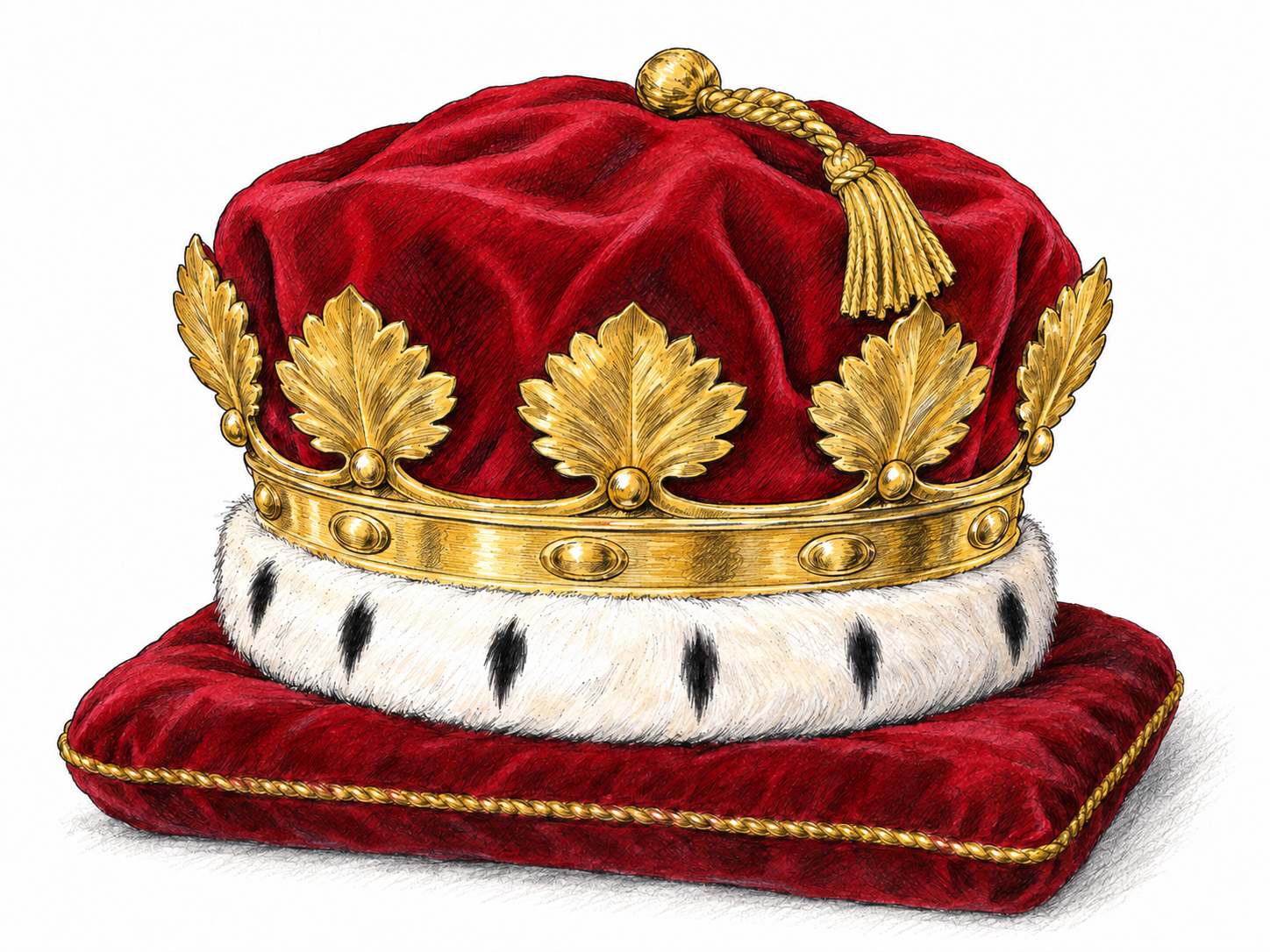
The ducal coronet bears strawberry-leaf ornaments above its band.
Etymology
Latin dux meant “leader” and became the title “duke.” With the relational ending, ducal describes what belongs to or concerns someone holding that rank, including a duchess.
In context
Dukes sat close enough to the crown that many royal family members held ducal titles themselves
More examples
- The letter bears the ducal seal.
- Several villages lie within the ducal territory.
- The eldest son inherits the ducal title.
Forms
ducal
duke noun — A nobleman of the highest hereditary rank.
duchy noun — A territory ruled by a duke.
Similar words
- princely
- Relates to a prince rather than to a duke.
- royal
- Relates to a king or queen, not a duke.