DictionaryRoot: -alis
Latin

-alis

of, relating to

Forms

  • -alis
  • -aris — Latin variant especially used when the stem already contained l, avoiding a repeated l sound.
  • -al — English ending borrowed through French or directly from Latin.
  • -ar — English ending continuing Latin -aris.

Origin

An older Latin adjective-forming suffix; its more remote ancestry is uncertain.

Note

Expresses a relationship without specifying its kind: material, place, purpose, and other connections are possible.

148 / 291
noun / adjective

marsupial

mar-SOO-pee-uhl/mɑrsˈupiʌl/

A mammal whose young typically develop in a pouch.

This kangaroo is a marsupial with a joey in her pouch.
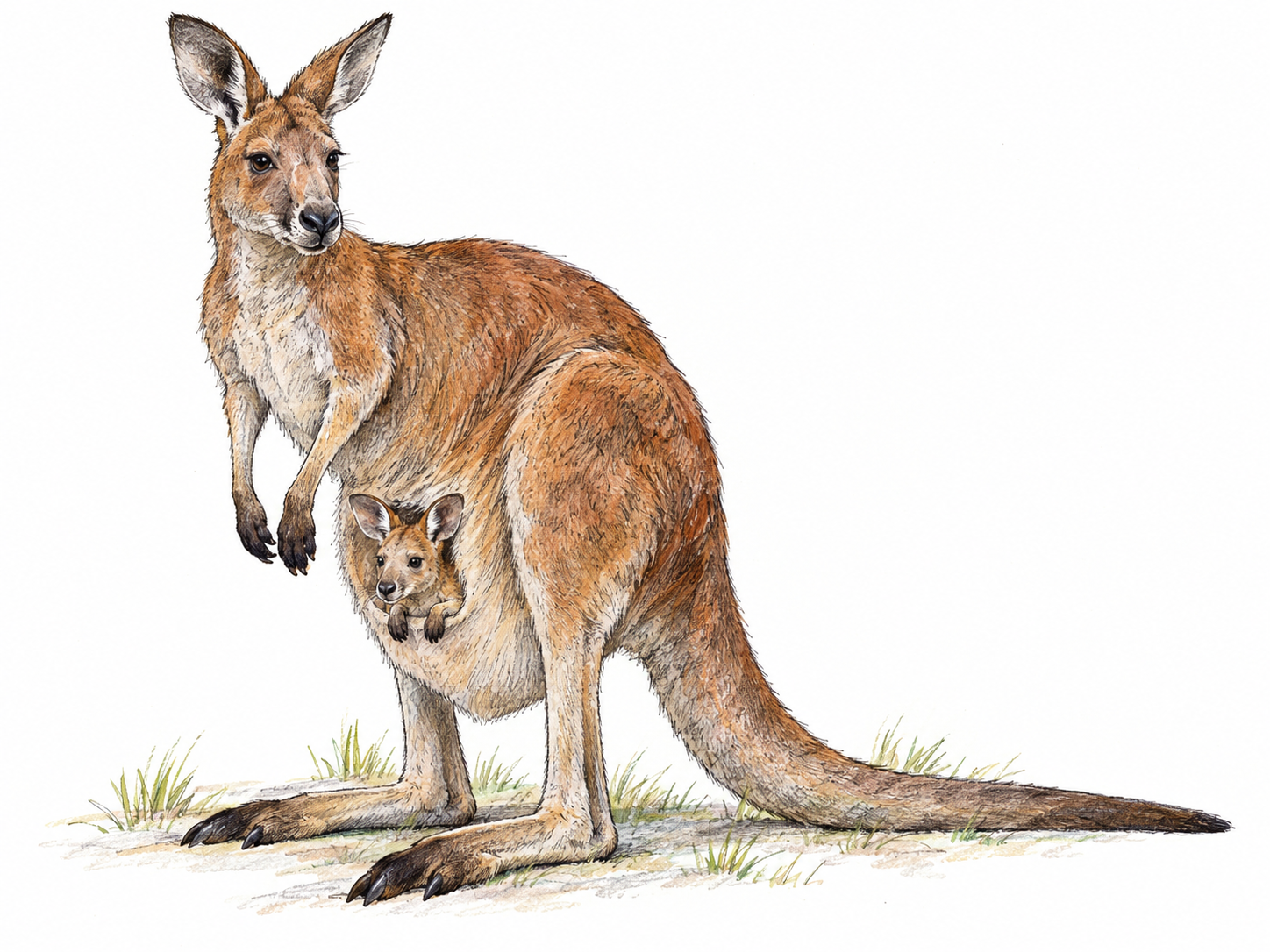
An adult female kangaroo standing in side-three-quarter view, with a small joey peeking naturally from her abdominal pouch, clearly illustrating a mammal whose young develop in a pouch.
Etymology

The pieces describe an animal as “having a pouch,” referring to the pouch in which its young often develop. Originally an adjective, marsupial became a noun naming the animal.

In context

Shankar IAS Academy2:49
while all marsupials give birth to undeveloped young ones only some marsupials have pouch marsupials like wombat kangaroo have pouch while short-tailed opossum which is also a marsupial does not have poach
The Hindu Daily News Analysis || 03rd April 2022 || UPSC Current Affairs ||Prelims'22 & Mains'22

More examples

  • An opossum is a marsupial, not a rodent.
  • Koalas and wombats are marsupials.
  • Many marsupial mothers carry their young in pouches.

Forms

marsupial · marsupials