adjective / noun
oriental
or-ee-EN-tul/ˌɔːriˈentl/
Relating to East Asia, in usage often outdated or offensive when applied to people.
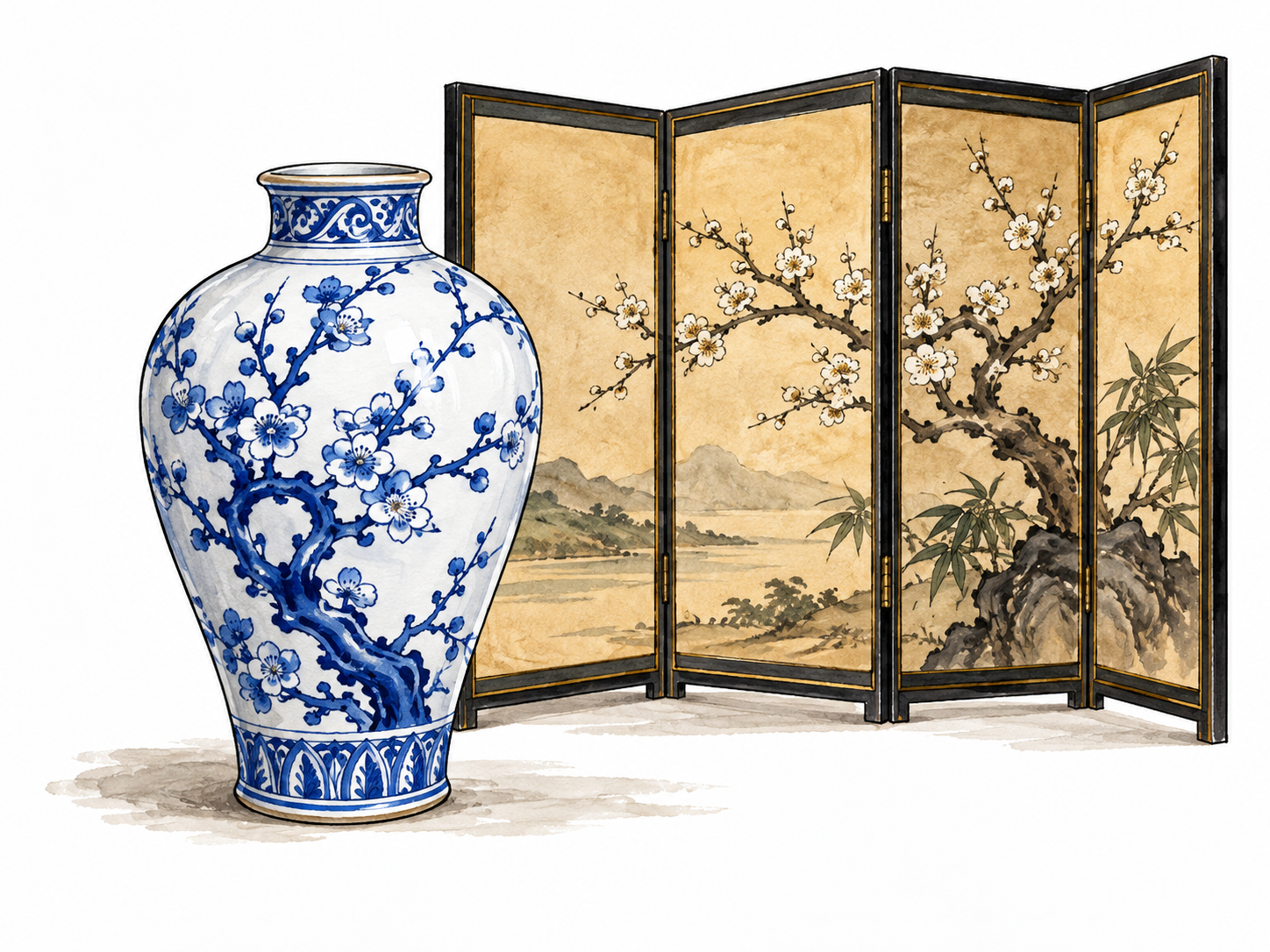
The oriental porcelain vase features a blue-and-white plum-blossom design.
Etymology
The pieces mean 'relating to the east,' with east identified by the rising sun. Here that geographical label refers specifically to East Asia, in usage now often considered dated or insensitive.
In context
which, with many others, form a vast mole, or rampart, lengthwise connecting Asia with Australia, and dividing the long unbroken Indian ocean from the thickly studded oriental archipelagoes.
More examples
- The catalog uses “oriental” for pottery made in East Asia.
- She replaces “oriental” with “East Asian” in the exhibit text.
- The old book calls East Asian people “orientals,” a term now usually considered offensive.
Forms
oriental · orientals
Similar words
- East Asian
- A current regional term, appropriate for people and cultures.
- Asian
- Refers to all of Asia, not just East Asia.