adjective
monumental
mahn-yoo-MEN-tul/ˌmɑːnjuˈmentl/
Exceptionally large, important, or impressive.
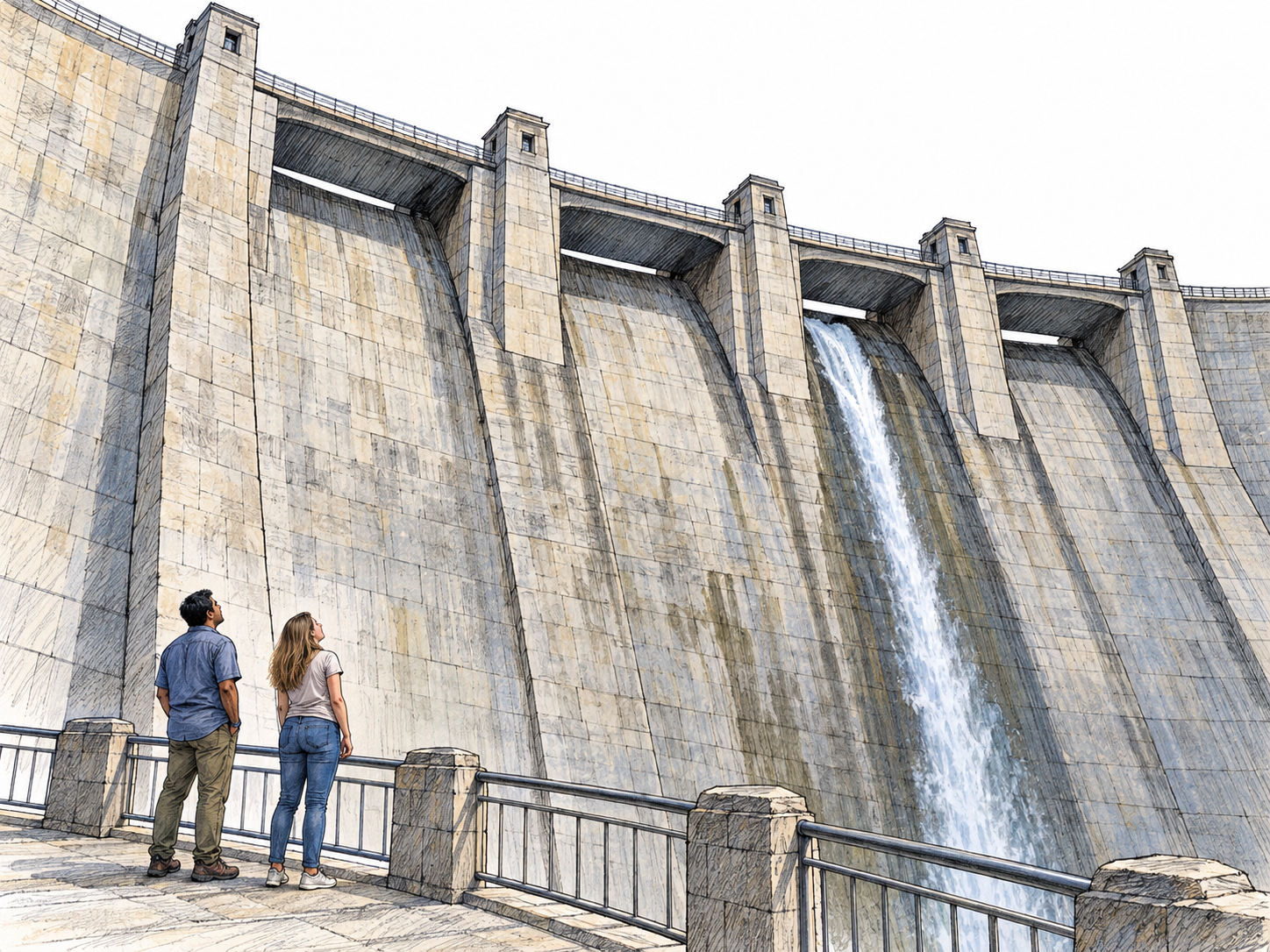
The monumental dam towers above the two visitors at its base.
Etymology
A monument is a structure that keeps something in memory. Monumental shifted from describing such structures to describing anything comparable to a monument in size, prominence, or impressiveness.
In context
… He's better known for his very large monumental canvases like a Sunday on Lagonat. And so we we don't think of him as a seascape painter, but actually they represent more than half of his production.
More examples
- The court's decision marks a monumental change in civil rights.
- Forgetting to save the file was a monumental mistake.
- They celebrate a monumental achievement after years of research.
Forms
monumental
monumentally adverb — To an exceptionally great or impressive degree.
Similar words
- enormous
- Emphasizes great size or quantity rather than lasting significance.
- momentous
- Emphasizes serious consequences rather than physical size or grandeur.
- impressive
- Emphasizes admiration, without necessarily suggesting exceptional scale or importance.