adjective
intestinal
in-TES-tih-nuhl/ɪnˈtestɪnl/
Relating to the intestines.
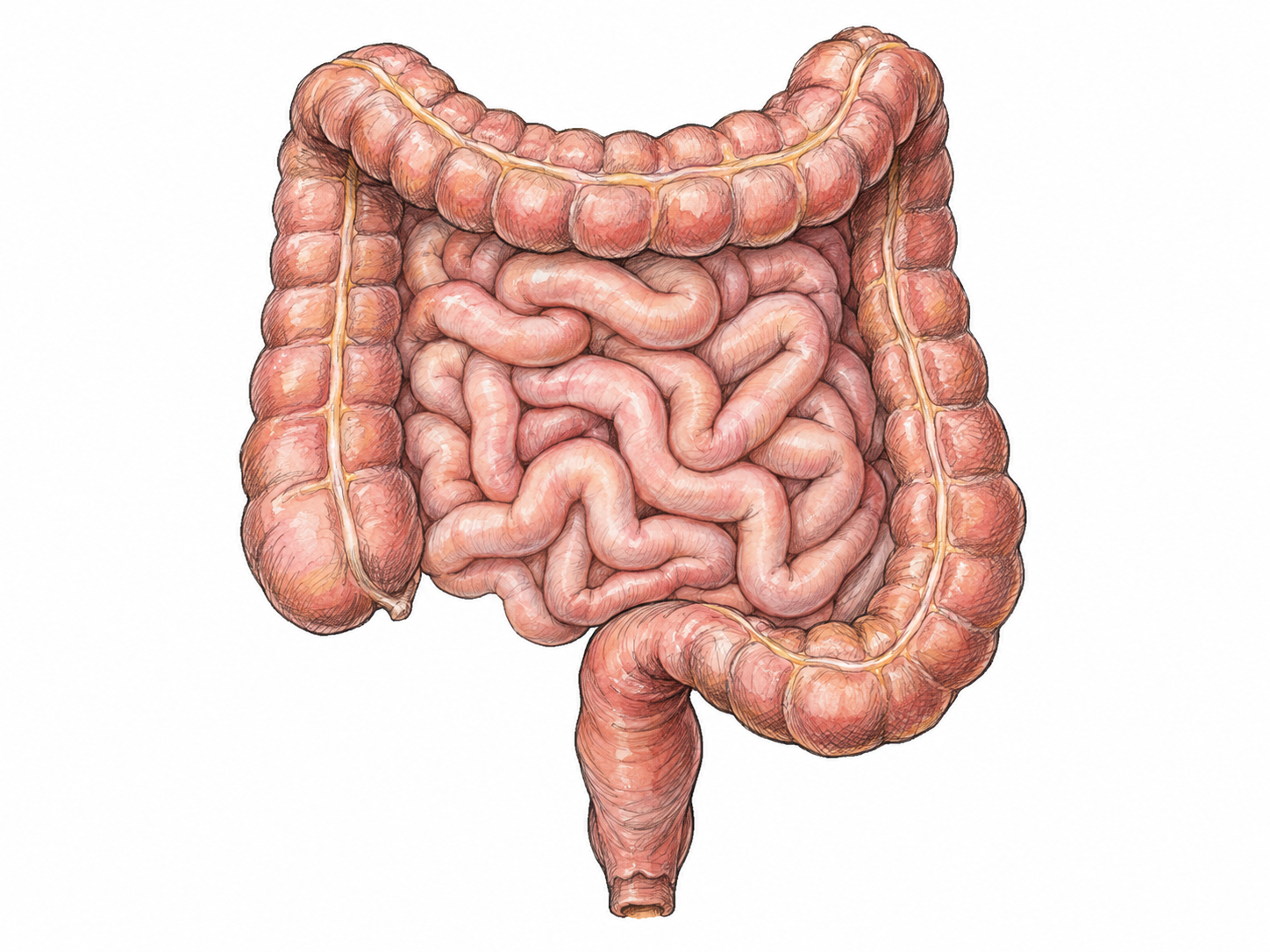
The model shows the intestinal coils framed by the broader large intestine.
Etymology
The adjective means belonging to the gut. Its noun base, intestinum, was itself a word for something “inward” or “internal,” naming the bowels by their position inside the body.
In context
If contaminated food is consumed, it can result in a condition called listeriosis. This happens during digestion when the bacteria penetrates the intestinal tract to cause systemic infections.
More examples
- Fiber helps maintain intestinal health.
- An intestinal blockage can require emergency surgery.
- Some intestinal bacteria help break down food.
Forms
intestine noun — The digestive tube beyond the stomach.
Similar words
- enteric
- Also means intestinal, especially in medical and biological contexts.
- digestive
- Refers to digestion generally, not just to the intestines.