adjective
glacial
GLAY-shul/ˈɡleɪʃl/
Of glaciers and their cold, slow-moving ice.
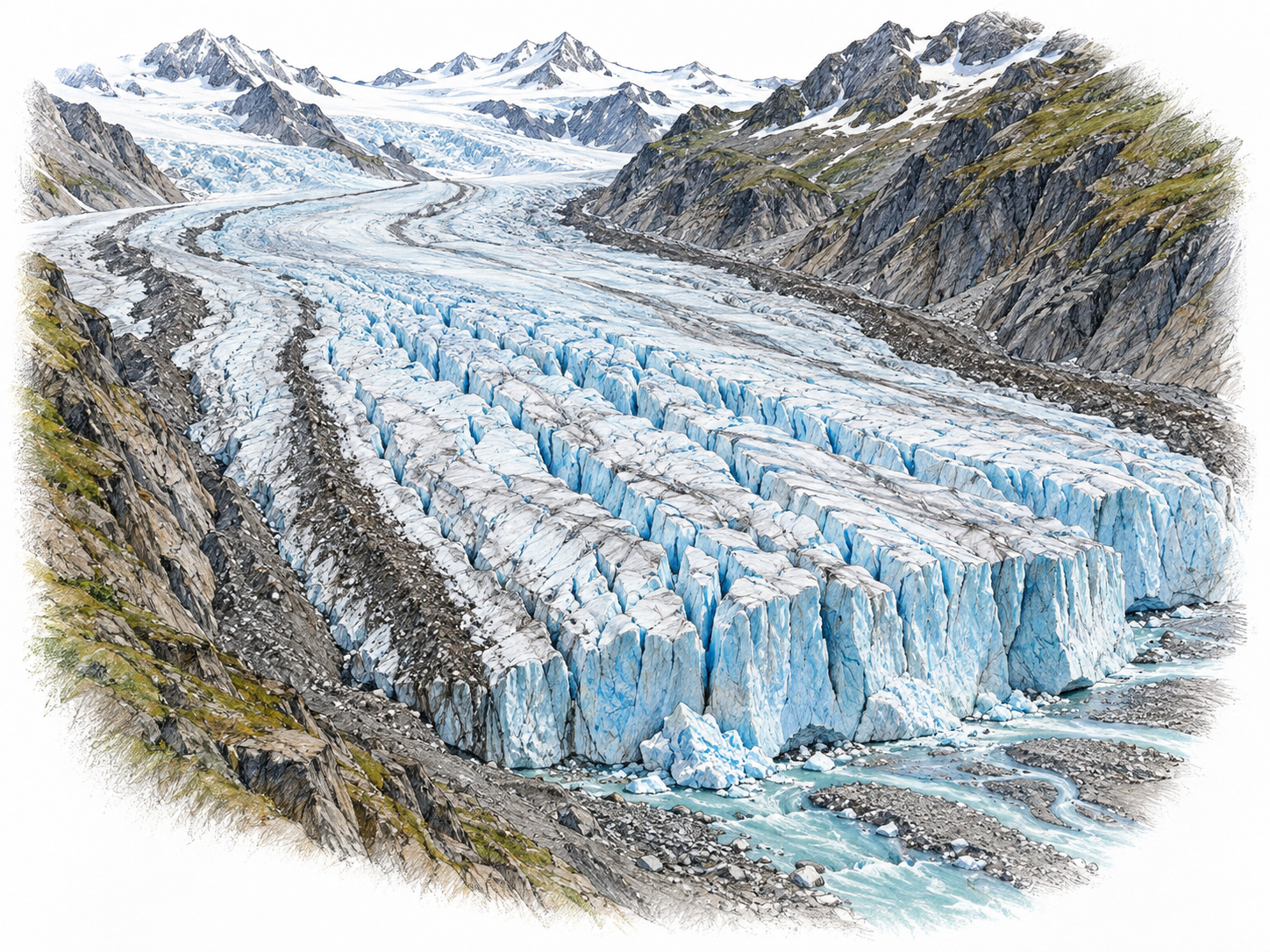
Glacial ice fills the valley between the rocky slopes.
Etymology
Originally describing something icy, glacial came to mean “pertaining to glaciers.” Their slow advance then supplied the image for anything proceeding at an extremely slow rate.
In context
the extreme cold of the deep water combined with the pressure slows down a creature's metabolism to an almost glacial [music] pace.
More examples
- Glacial erosion leaves deep scratches in the exposed rock.
- The lake fills with glacial meltwater each spring.
- Scientists study glacial deposits to trace the ice sheet's former extent.
Forms
glacial
glacier noun — A large, slowly moving mass of ice.
glaciation noun — Formation or spread of glaciers over land.
Similar words
- icy
- Describes frozen or ice-covered things, not necessarily involving glaciers.
- glaciated
- Specifically describes land covered or shaped by glaciers.