adjective / noun
radial
RAY-dee-uhl/ˈreɪdiəl/
Extending along lines outward from a center.
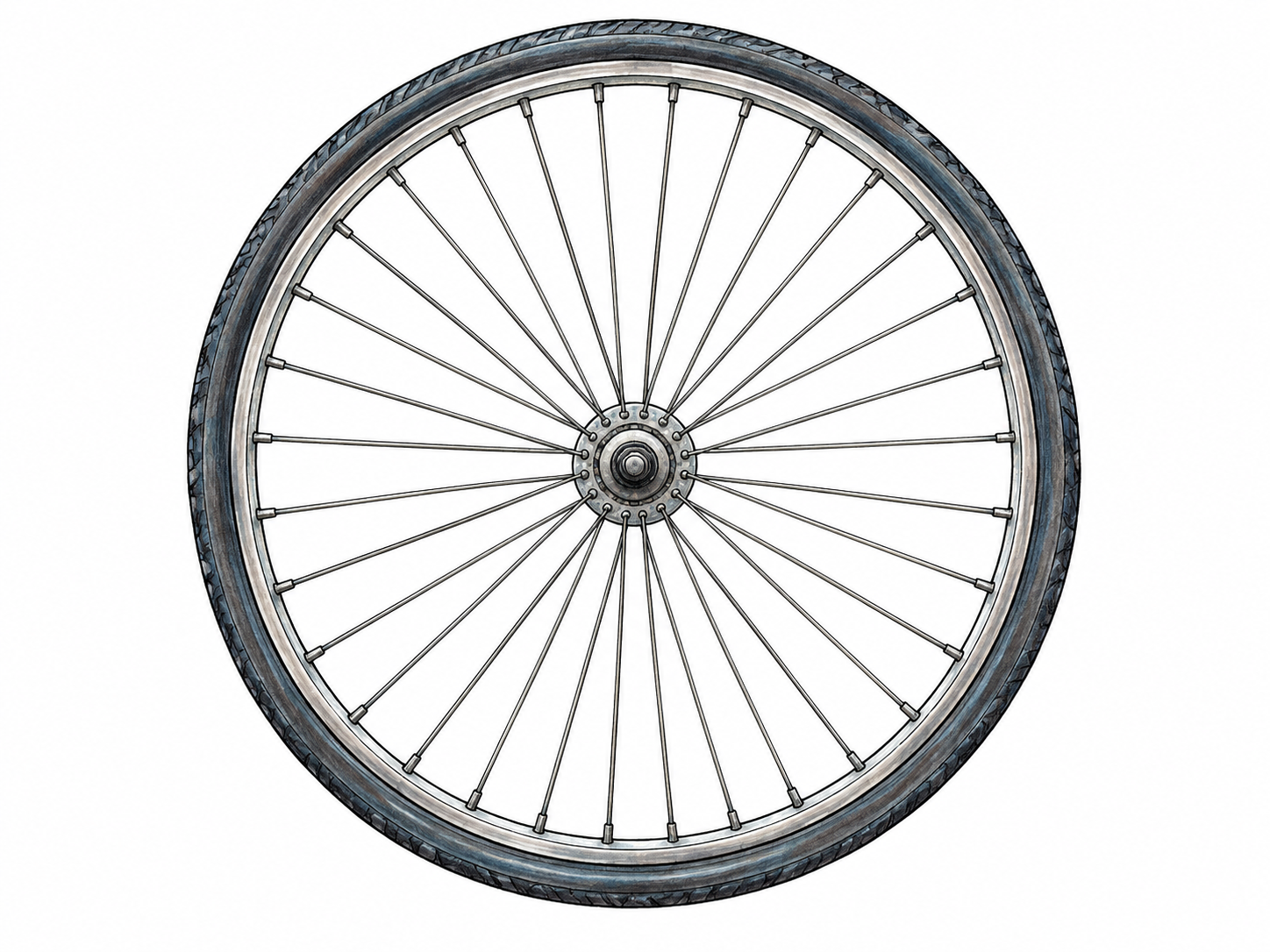
The wheel's spokes form a radial pattern around its hub.
Etymology
A radius was both a ray of light and a wheel spoke. Radial arrangements share their outward-reaching pattern: lines or parts extend from a common center.
In context
all the lines of the the leaf bracks extend sort of radial like from the center.
More examples
- Radial paths lead from the fountain to the garden's edges.
- The cracked glass shows radial lines around the impact point.
- The mechanic replaces the worn radials with a new set.
Forms
radial · radials
radially adverb — Along lines extending outward from a center.
Similar words
- radiating
- Emphasizes spreading outward rather than alignment with a radius.