adjective
perpetual
per-PECH-oo-uhl/pərˈpetʃuəl/
Continuing or recurring without an apparent end.
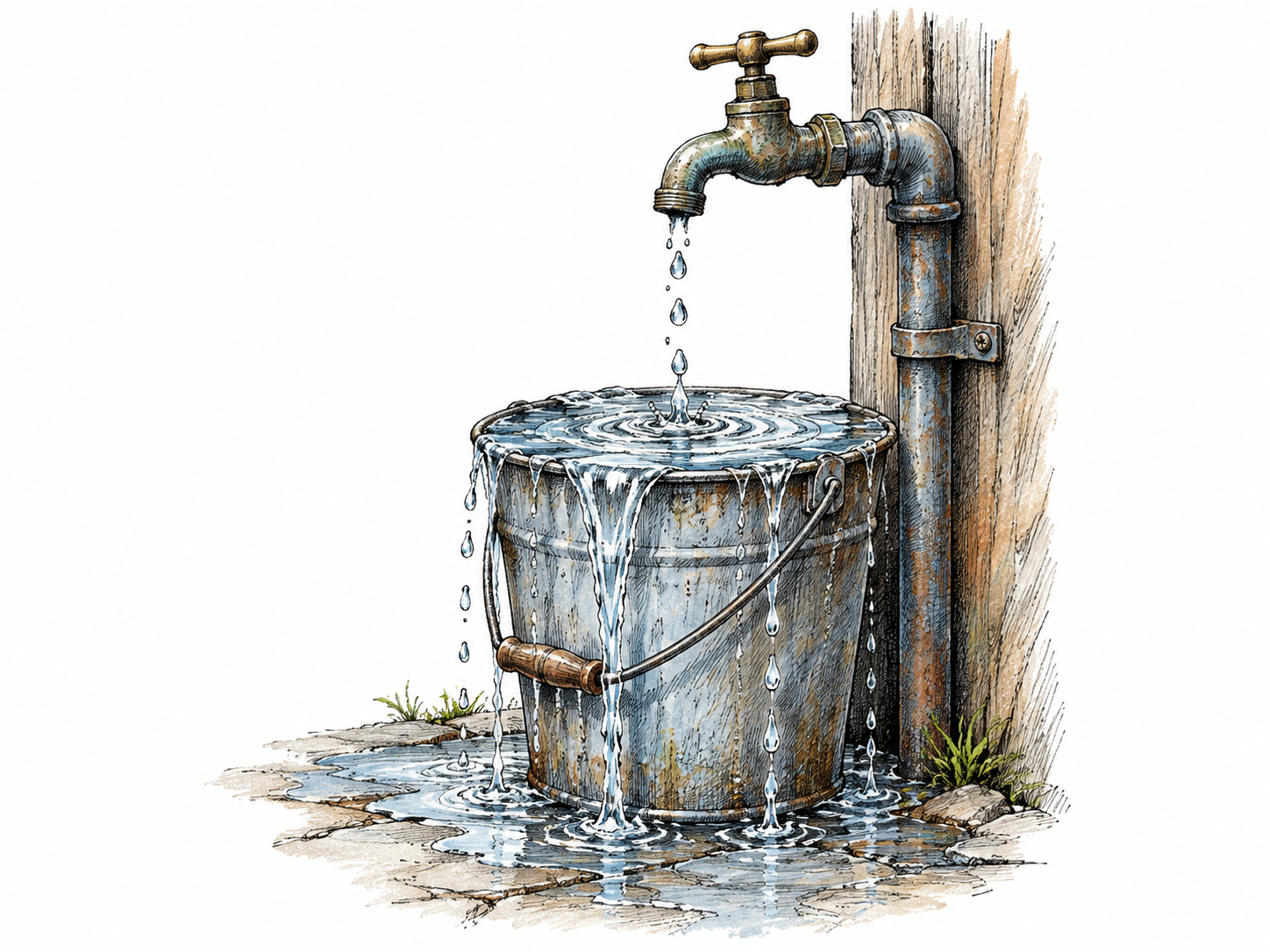
The worn faucet's perpetual dripping keeps the bucket overflowing.
Etymology
The base means “continuous,” so perpetual describes something with no interruption or end. This supports both literal endless duration and the impression that something never stops.
In context
a perpetual state of refreshing the moment he dies. Over and over again
More examples
- The apartment is in a perpetual state of renovation.
- I'm tired of their perpetual complaints about the weather.
- The cave's deepest chambers remain in perpetual darkness.
Forms
perpetual
perpetually adverb — Without stopping or with frequent repetition.
Similar words
- constant
- Emphasizes steady presence or frequent recurrence rather than endless duration.
- continuous
- Emphasizes an unbroken stretch, even when an endpoint exists.
- incessant
- Emphasizes relentless repetition or continuation, often felt as annoying.