adjective / noun
digital
DIJ-ih-tul/ˈdɪdʒɪtl/
Using discrete numerical representations of information.
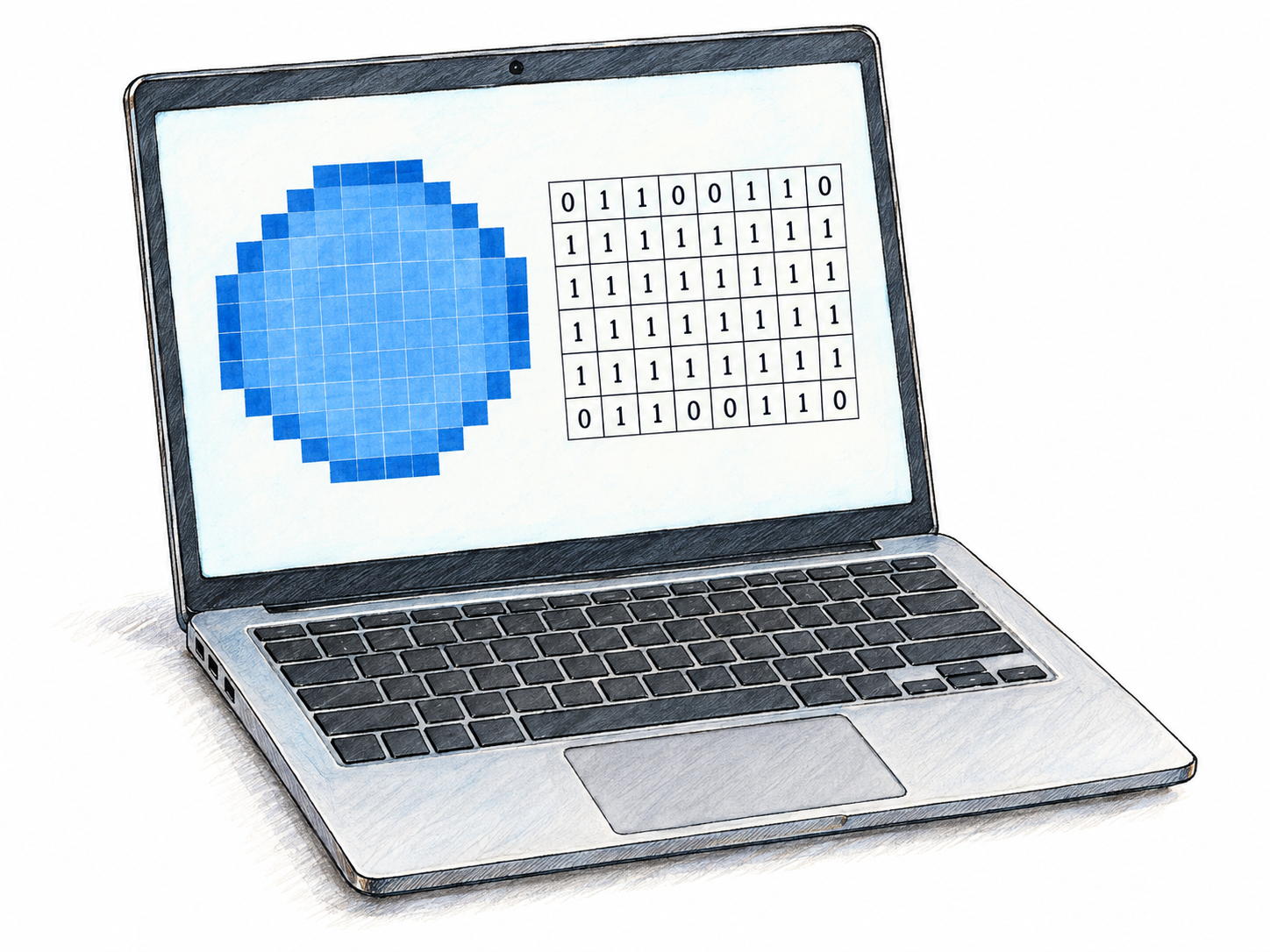
The laptop displays a digital image beside a grid of binary digits.
Etymology
Counting on fingers connected digitus with numerical digits. Digital later came to mean “using numerical digits,” making it applicable to computers that process information represented in that form.
In context
see this coming to the front and it is interesting to see you know how they um we start with brick and mortar and we end up in a totally digital environment composed of zero one
More examples
- The recorder converts sound into digital data.
- I keep digital copies of important documents.
- She works in digital, managing online advertising campaigns.
Forms
digitally adverb — Using technology that represents information numerically.
Similar words
- computerized
- Computerized specifically involves computers; digital also describes signals and recordings.
- electronic
- Electronic concerns circuitry, which may process analog or digital information.