adjective
proportional
pruh-POR-shuh-nuhl/prəˈpɔːrʃənl/
Corresponding in size, amount, or degree according to a ratio.
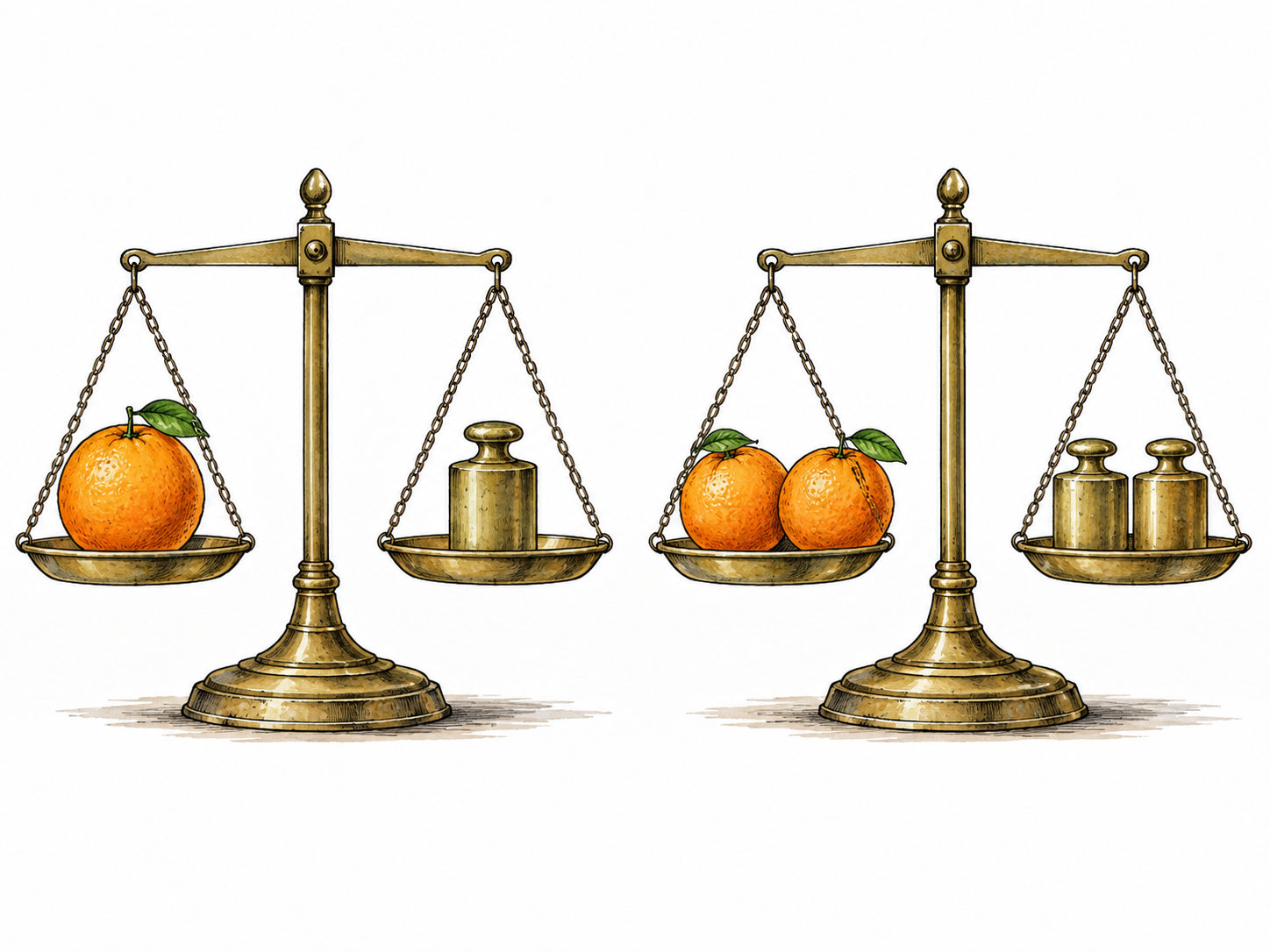
The number of matching weights is proportional to the number of oranges.
Etymology
The Latin base concerns a relation between things, not an isolated size or amount. Something proportional therefore corresponds to something else according to a particular ratio or degree.
In context
reducing the rent proportional to the amount of damage done
More examples
- The diagram keeps the parts proportional.
- The response was not proportional to the problem.
- The quantities change in proportional amounts.
Forms
proportional
proportion noun — a comparative size or amount
Similar words
- corresponding
- Corresponding means matching in some relationship; proportional specifically follows a ratio.
- commensurate
- Commensurate means appropriately matched in degree; proportional can describe an exact mathematical relationship.