DictionaryRoot: -alis
Latin

-alis

of, relating to

Forms

  • -alis
  • -aris — Latin variant especially used when the stem already contained l, avoiding a repeated l sound.
  • -al — English ending borrowed through French or directly from Latin.
  • -ar — English ending continuing Latin -aris.

Origin

An older Latin adjective-forming suffix; its more remote ancestry is uncertain.

Note

Expresses a relationship without specifying its kind: material, place, purpose, and other connections are possible.

131 / 291
adjective

larval

LAR-vul/ˈlɑːrvl/

Relating to an animal's immature larva stage before adulthood.

The newly hatched caterpillar begins its larval stage on the leaf.
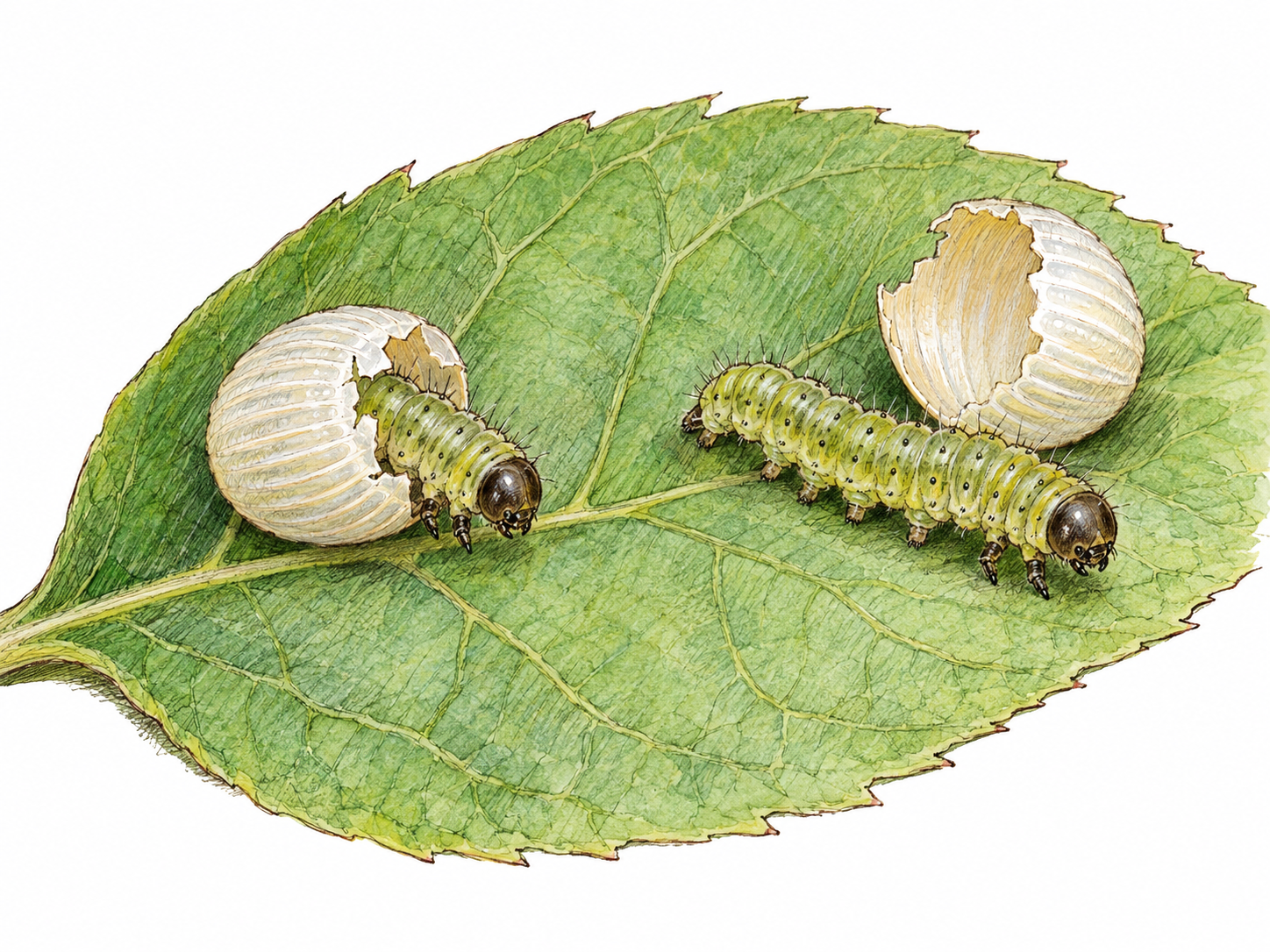
Close natural-history view of a newly hatched caterpillar emerging from its egg on a leaf, beside a fully emerged tiny caterpillar and an empty eggshell.
Etymology

Latin larva meant both a ghost and a mask. Immature animals were called larvae because their unlike appearance was seen as masking the adult form, giving larval its zoological meaning.

In context

NDSUExtension13:53
it's very effective against the young larvae so you need to get it on in the early growth stages of the larval stage
2022 Spring Fever Garden Forums: Insect Pests Found in Flower Gardens

More examples

  • Caterpillars are the larval form of butterflies and moths.
  • Many fish feed on larval insects.
  • During its larval stage, the beetle feeds on wood.

Forms

larva noun — An immature animal before its adult stage.

Similar words

immature
Means not fully developed, without specifying a larva stage.
juvenile
Describes young animals generally, not specifically those in a larva stage.