adjective / noun
neutral
NOO-trul/ˈnuːtrəl/
Not characterized by either of two opposing qualities.
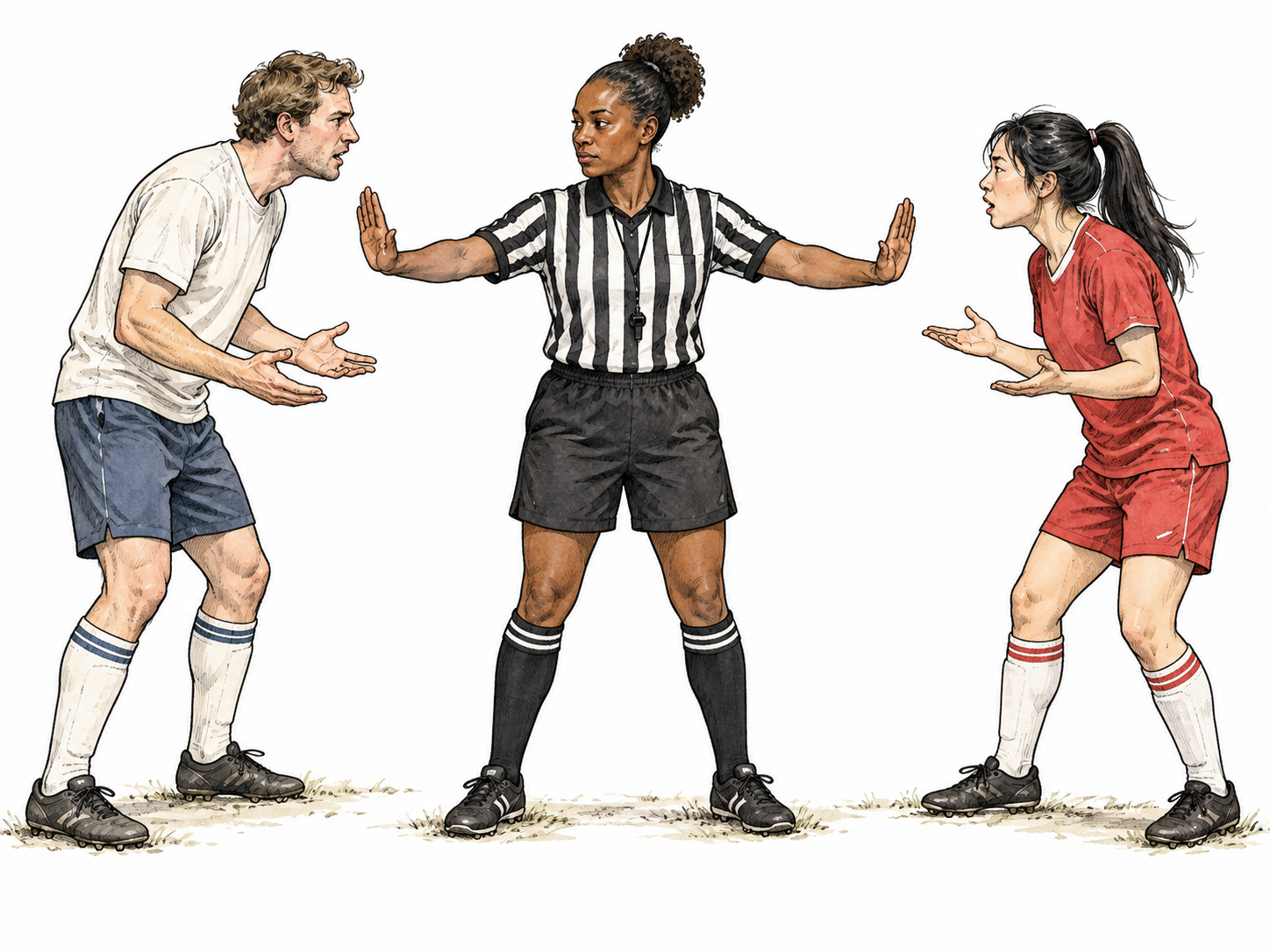
The referee stays neutral and favors neither of the players.
Etymology
Neuter supplies the idea of ‘neither of two’: a neutral participant supports neither opposing side. This nonpartisan use probably reflects a similar meaning already present in Medieval Latin neutralis.
In context
we weren't neutral. We were very very much on the side of the the Western and the NATO and and the Atlantic countries.
More examples
- The negotiators choose a neutral to oversee the talks.
- Pure water is neutral, neither acidic nor alkaline.
- His neutral reply expresses neither approval nor disapproval.
Forms
neutral · neutrals · more neutral · most neutral
neutrality noun — The state of not favoring either side.
Similar words
- impartial
- Emphasizes fair judgment rather than simply taking no side.
- nonaligned
- Usually describes countries outside competing political or military alliances.