DictionaryRoot: -alis
Latin

-alis

of, relating to

Forms

  • -alis
  • -aris — Latin variant especially used when the stem already contained l, avoiding a repeated l sound.
  • -al — English ending borrowed through French or directly from Latin.
  • -ar — English ending continuing Latin -aris.

Origin

An older Latin adjective-forming suffix; its more remote ancestry is uncertain.

Note

Expresses a relationship without specifying its kind: material, place, purpose, and other connections are possible.

211 / 291
noun / adjective

potential

puh-TEN-shul/pəˈtenʃl/

The capacity for future realization or development.

The acorn has the potential to develop into a mature oak.
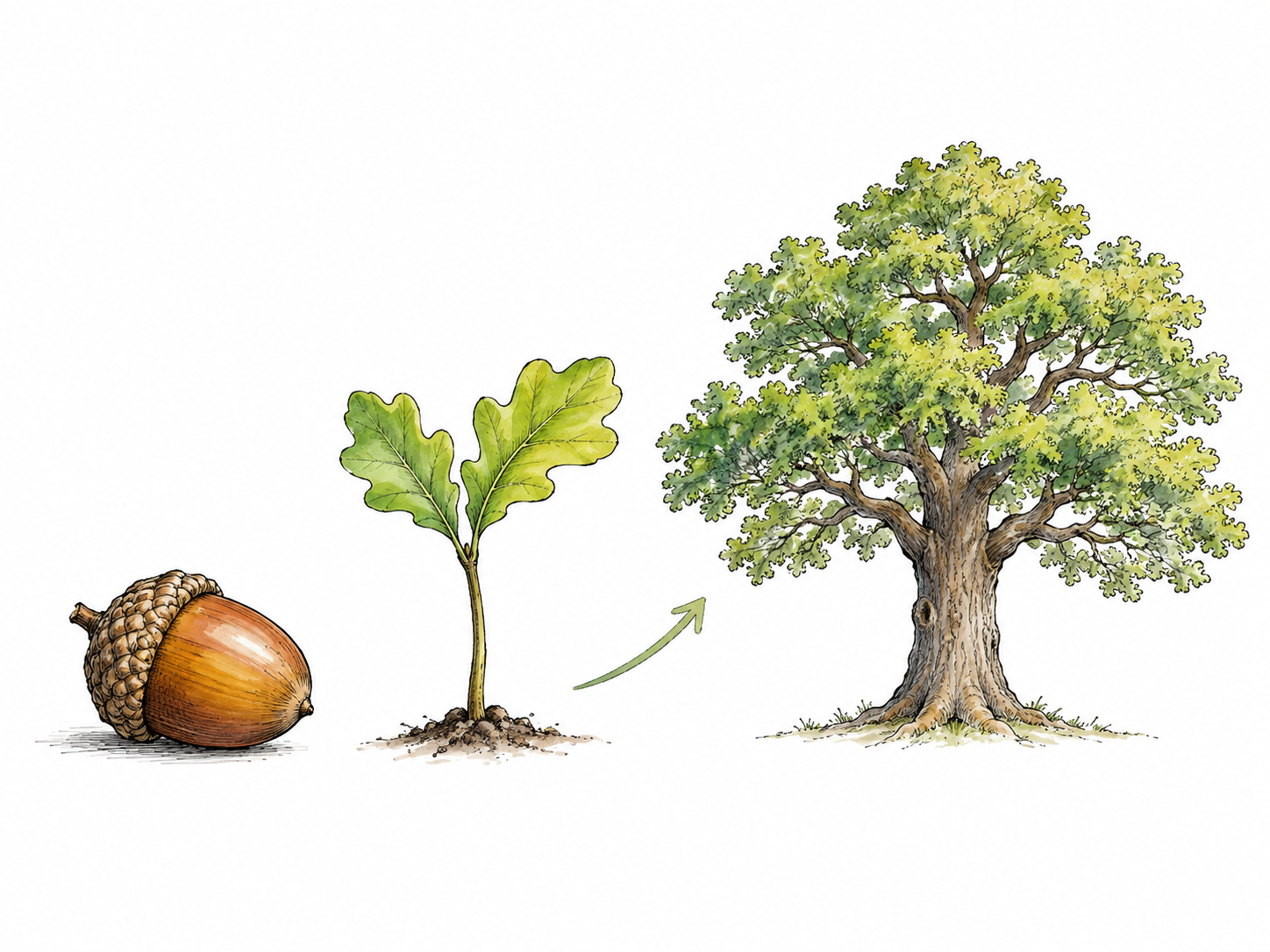
Single acorn beside tiny young oak seedling and faint outline of mature tree above it, future capacity grows from seed; restrained small progression arrow, white ground, no forest.
Etymology

Here power means the capacity for something to happen or develop, rather than an effect already achieved. Something potential can become actual but is not actual yet.

In context

World Economic Forum5:21
send a clear signal to potential aggressor in the future
Securing Europe | Davos | #WEF22

More examples

  • This empty lot has the potential to become a neighborhood garden.
  • We discuss potential problems before starting the project.
  • The new insulation offers potential savings on heating bills.

Forms

potential

potentially adverb — Possibly, depending on what happens next.

Similar words

capacity
Capacity emphasizes how much someone or something can do.
promise
Promise suggests encouraging signs of future success or improvement.
possible
Possible means something could happen, without suggesting existing capacity.